
Exclusive to


English
te reo Māori
Chinese



Timber Clean Brightener
& Preparation
Cleans, brightens, and treats mould. Timber cleaner for preparation of all new, weathered, greyed and mould-affected decking and timber surfaces prior to staining or coating
IDEAL FOR USE ON: New, weathered, greyed, stained & mould affected decking & timber surfaces including outdoor furniture, weatherboards, pergolas & fences

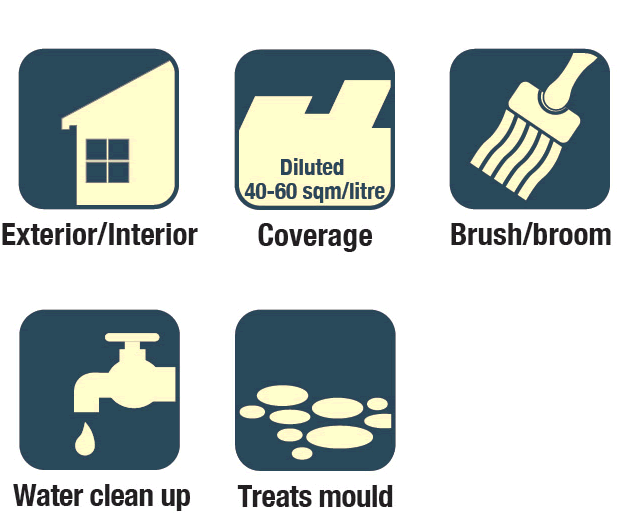
Coverage approx
40 to 60 sqm/litre
Apply by Brush
or Broom
Water clean up
-
Water based, concentrate 1 litre makes 5 litres
-
Use on all new, weathered, greyed, stained & mould affected decking & timber surfaces including outdoor furniture, weatherboards, pergolas & fences
-
Cleans, treats & removes dirt, mould, mildew, grease, oil & other contaminants
-
Assists in opening the fibres to aid penetration of the timber surface prior to coating
-
Now supplied in an ECO BOTTLE… made from 100% NZ post-consumer kerbside collected recycled milk bottles.

Why You Must Prep Your Deck Before Staining (PREPMAX NZ Guide)
WHEN TO USE PREPMAX:
Prior to the application of DECKMAX, clean and treat all timber surfaces with PREPMAX Timber Clean & Prep following label instructions. If mould or mildew is present, pre-treat the timber surfaces in advance with PREPMAX and leave for at least 2 weeks, then remove any dead material by scraping, scrubbing or sanding. Reclean the surface with PREPMAX before application of DECKMAX.
New Pine:
New decking timber should initially be weathered for 8 weeks. Note: Shiny (mill glazed) machined timber surfaces may need to be sanded to allow penetration.
New Hardwoods:
We recommend hardwood timbers be weathered for 12 weeks. This is to assist with the removal of oily tannins and opens the fibres to aid penetration. Rinsing with water several times over this period is beneficial.
Weathered Pine & Hardwoods:
If the natural wood grain is to be restored, badly weathered and greyed timber may require sanding back to a clean, sound surface.Previously Stained & Oiled Timber: Clean and treat with PREPMAX or if a natural wood grain look is required, it may be necessary to sand back to bare timber followed by cleaning with PREPMAX. To remove paint or other coatings back to a bare surface, a combination of paint remover and sanding should be used followed by PREPMAX.
Note: Heavy water blasting is not recommended as it can “fluff” the timber surface, use a low-medium pressure wash down and/or scrubbing.
HOW TO USE PREPMAX:
-
Sweep or wash down with water to remove any surface dirt.
-
Shake PREPMAX concentrate thoroughly. Mix 1 part PREPMAX to 4 parts water in a plastic container. This will treat approximately 10-15 square metres depending on the texture and absorbency of the timber.
-
Using clean water, wet the timber area.
-
Using a stiff bristle broom/brush apply the PREPMAX mixture generously to the timber surface in sections, ideally along the full length of each piece of timber.
-
Scrub the timber vigorously to ensure good “foaming” of the mixture.
-
Leave the mixture on the timber surface for approximately 15 min. During this time, it may be necessary to apply more mixture to ensure the surface is kept wet.
-
Rinse off the timber surface thoroughly using a low-medium pressure wash down.
-
Allow the timber surface to dry before applying the coating.
HELPFUL HINTS FOR DECKMAX DECKING STAIN:
-
Try to prep and stain timber surfaces out of direct sunlight. If applied to hot surfaces, difficult application may be experienced due to rapid evaporation.
-
Always colour test first to check your choice of DECKMAX colour gives the result you want on the actual timber you are staining. Wet colour will darken once dry.
-
Apply DECKMAX along the entire length of the boards and maintain a wet edge to avoid lapping joins, 2-3 boards at a time is best.
-
Two coats are recommended to give greater durability and protection to the timber.
Refer to our Tech Data sheet for more detailed information.

Frequently asked questions
- 01
- 02
- 03
- 04
- 05
- 06
- 07
- 08
- 09
- 10
- 11
- 12
- 13
- 14
- 15
HOW TO GUIDES & ADVICE


